Wednesday, November 8, 2023

Exploring Authentic Writing Experiences at ASHA

I will travel to Boston, MA, in one week for the American Speech-Language and Hearing 2023 Conference (#ASHA2023).  If you are going, check out Booth 1254 for Word Travel Press along with my presentation on Saturday afternoon from 4-5 p.m. entitled "Story Frames for Teaching Literacy: Using Narratives as a Bridge to Informational Text." The presentation is largely based on Chapter 7 of my Story Frames book - "From Story Writing to Expository Writing: Bridging the Gap with Narrative Nonfiction," but the strategies I discuss may be used with any program. 

I gave a similar presentation twice this year already in author/educator panels with Jolene Gutierrez and Beth Anderson. See my interview with Beth, where she talks about The Resilience of English Language Learners. Then check out my blog post with Jolene on The Resilience of Bionic Beasts. I'm excited to announce that CCIRA has asked us to present this same author panel on February 8-10, 2024 in Westminster, CO. The specific day will be determined later. All the attention on this topic confirms my belief that students need help making the leap from stories to informational text in both reading and writing.
In addition to discussing ways that narrative strategies may be used to enhance understanding of informational text and vice versa, I will also discuss ideas for exploring authentic writing opportunities, including crafting a "Letter to the Author" that follows a format similar to a short essay. One of the most successful writing activities I ever conducted for struggling learners was in a tenth-grade special education Language Arts class. It was a Letter to Author Cynthia Leitich Smith that arose organically after we read the graphic novel based on her book, Tantalize. Because they knew their letters were going to a real person, the author of a book they enjoyed, everyone participated in a way I hadn't seen with any other writing activity. Students were eager to edit because they wanted their letters to be perfect. Some even brought in special stationery.

I always get excited when I learn about opportunities for students to explore authentic writing experiences. Jill Lauren, creator of the Whole Phonics series of decodable texts, is a member of the Decodable Book Alliance that I joined recently when I started writing decodable books. Jill is holding a contest through November 30th where students can win a puzzle by illustrating a scene from one of her books and writing a one-sentence description. Find out more HERE. If you don't have any of Jill's books, don't worry. You can get a free copy of A Pig and His Wig by visiting her website at  https://whole-phonics.com/ and joining her mailing list. She offers 4 other decodable texts on her partnership page with ReadWorks. These free titles include Zac's Pal (short "a"), Rod's Box (short "o"), Buzz, Buzz (short "u"), and Get Up! (short "e"). You will want more of her books, but you can start now with these for free. 
Often, decodable books lack real-world application, but Whole-Phonics does a good job of bridging this gap by partnering with ReadWorks to provide background knowledge. That's exactly the gap I'm attempting to fill with my HOT ROD decodables for older readers. 

Writing contests provide simple but compelling opportunities for authentic writing. If you are wondering what decodable books are, check out the article on my website at https://www.wordtravelpress.com/. Go to the tab at the top for Resources>Decodable Books. You can also learn about the HOT ROD series (Higher Order Thinking through the Reading of Decodables).

I was already working on a December Poetry Giveaway to encourage reading and writing over winter break when I read about Jill's contest,  I decided to turn my Poetry Freebie into a contest starting on December 1 after Jill's contest ends. If you want to be sure to get the latest information about that contest, as well as other freebies, articles, and book news, join my Author Newsletter list. You will automatically receive a PDF of my first decodable book, No Gift for Man. You may unsubscribe at any time.

The Decodable Book Alliance works in conjunction with Teach My Kid to Read which is a 501c3 dedicated to educating librarians about the importance of decodable text. My next post will be about their experiences at the recent New York Library Association Conference, so stay tuned.

HINT: My December poem giveaway is called, A Long Winter's Nap and was inspired by a mother bear hibernating in a most unusual location.

Friday, October 20, 2023

DyslexiaCon 2023 Conference Highlights

Last week the International Dyslexia Association held their 74th Annual DyslexiaCon Conference in Columbus, Ohio. For me and members of the Branch Council, festivities began on Wednesday night with a special reception for the presidents and board members of the 44 branches of IDA.

Thursday morning I had the great honor of co-presenting a 2-hour session with Kelly Cartwright Ph.D. called Hercules Vs. Heracles, the Importance of Cognitive Flexibility. Kelly is not only brilliant, but she is also able to translate that brilliance into language and practical examples everyone can understand. To our surprise and delight, close to 500 people attended our session. Many of them stopped by my booth for Word Travel Press later that day to continue the conversation. Kelly and I are currently working on a study to determine the effects of cognitive flexibility games on decoding. To find out more, check out my website page on Cognitive Flexibility.  Kelly's publisher is offering a special discount on her book. Use code AF2E at Guilford Press.


Friday morning I started my day with a brainstorming session with the presidents of the Western Region branches (Austin, Dallas, Houston, Arizona, Utah, Rocky Moutain, and Southwest). I'm always inspired by this lively group. They shared ideas and inspirations. That night we all went to dinner at Buca Di Beppo. I have been serving as the IDA Advisor for the Western Region for over a year now, and it has been a pure delight getting to know these women who are changing laws and transforming lives.

After dinner, we attended a viewing of Harvey Hubbell's new movie, Hopeville, about a school called Hopeville that turned around student performance by implementing structured literacy. Afterward, Harvey (far left) led a discussion of the movie with leaders in the field of dyslexia.

I was so busy that I didn't get to attend many sessions, so I'm really looking forward to the conference recordings. I did take a spin around the exhibit hall and met up with my old friend Mary Jo O'Neill at the Brookes booth. She wrote a chapter for my book, Story Frames for Teaching Literacy about her work as a family advocate. She helps parents write a Family Story that they then use to help teachers and administrators better understand their students. 


I'm already getting ready for next year. The 75th Annual Conference on Reading, Literacy & Learning will be held in Dallas, Texas. I hope to see you there!

Sign up for my newsletter to keep up with upcoming book news and free offers. Visit the Sign Up Page on my website and receive a FREE digital copy of my decodable book, No Gift for Man.

Thursday, October 19, 2023

Debut Author & Illustrator Krista Weltner Talks About Growing Up with Dyslexia


This week, I'm interviewing debut author/illustrator Krista Weltner who is talking about her new series, Everyday Adventures with Molly and DysLEXia. The series is based on Krista's personal experiences growing up with dyslexia. 

Q. Krista, your debut picture book series, Everyday Adventures with Molly and DysLEXIa, is coming out in January. You have based the series on your personal experiences. What is one thing that you hope that children take away from the book? What about teachers and parents?

I hope children will grow in their understanding of dyslexia and themselves. I want them to feel proud of who they are and the unique strengths they bring to the table. For parents and teachers, I hope they can use my books as conversation starters. These books are great for aiding in discussions about self-advocacy, self-esteem, and personal strengths. 

Q. You are both the author and illustrator of the book. You have also created a short film called Partially Compensated which beautifully “illustrates” how you used art as a struggling learner to compensate for your challenges with reading and writing. Tell us more about how art helped you form a bridge between images and words. 
 
The title, "Partially Compensated" refers to the teacher and main character, Violet. I recognize that environments that children must learn will not always match what they need. Violet partially compensates the teacher by participating as best she can. Instead of drawing on her essay she also tries to spell out some words. The teacher partially compensates for Violet by altering his expectations and a class assignment to acknowledge that Violet is different from his other students. He allows her to draw on one section of the paper but also indicates a space in which she should try to write things. 

I think prior to sharing my film, I felt misunderstood. Dyslexia is a complex topic. I think something that can be overlooked is the emotional impact it can have on a person.  After sharing my short film I started hearing the reactions to the story from both dyslexic and neurotypical people and suddenly I felt understood. I was able to explain what dyslexia was like through story-telling. I think when we create art we invite the viewer to become a part of the story and relate what they are seeing to themselves. 

                                      
Click HERE to watch Partially Compensated

Q: How is Everyday Adventures with Molly and Lexi different than other books about dyslexia?

There are some wonderful books out there about dyslexia. I'm so grateful that my publisher, Free Spirit Publishing wanted to do a series. Most picture books on this topic are stand-alone. Because we had the freedom and space to explore Molly and Lexi's story in three books we were able to highlight things that are not often talked about. My favorite book in the series is Molly Tells the World. It's the second book. In it, Molly's class is getting a new student, Leeann. Leeann is very open and excited to tell the class about her own dyslexia and Molly is grappling with the idea of whether or not to share with the class that she is dyslexic too. In Molly's world, her dyslexia is an imaginary friend with a face resembling her own but filled with mixed-up letters. As she deals with internal conflicts she has Dylsexia "Lexi" to talk with.

Q: How do you see yourself as a dyslexia advocate in the past and in the future?

In the past, I have been an advocate for children with dyslexia by sharing my film and talking about my story. I've done this in a variety of settings, school events, charity fundraisers, etc. Something I ask myself a lot is: what does being an advocate mean to me? I don't work in education and I'm not a parent fighting for their child to receive appropriate services (These are the real heroes) But as a dyslexic artist who made it to the other side, what I can offer is insight and perspective on the experience through my work.  I am looking forward to continuing to advocate for dyslexic kids and sharing my books with the world. 

Creating my film was such a rewarding experience and the people I think it benefits most are adults like myself. But my books are for the dyslexic people who need it most, children just starting the journey. I'm looking forward to giving them something made just for them. 

Q: You are currently offering free online classroom visits to promote your new series. Tell us a little bit about what those visits entail and how teachers or administrators can contact you.

Yes! I am offering a limited number of free virtual presentations starting in November. These will be a workshop I call How a Picture Book Gets Made, and they provide a behind-the-scenes look at my book. The goal is to share the projects and hopefully inspire some young writers. These will be worked out on a case-by-case basis. Teachers and administrators can contact me via email, kweltner206@gmail.com

If you would like to follow Kirsta's work you can join her mailing list here: Mailing list
or follow her on Instagram: Instagram
See her short film here: Partially Compensated


In celebration of Dyslexia Awareness month, Krista is offering the FREE dyslexia poster above for the month of October. Follow the LINK to download and print an 8.5x11 or 11x17 poster.

Krista's series will be available in January. You may pre-order it below.

Bookshop

Amazon

Free Spirit Publishing


Thank you, Krista, for sharing your talents with us. 


Visit last week's blog post to see my interview with author, Polly Holyoke who talks about her daughter's challenges with dysgraphia and her new fantasy series.


Sign up HERE for the Carolee Dean, Author newsletter and receive a FREE digital copy of my book, No Gift for Man. You will also receive monthly updates, book news, and FREEBIES. 


Tuesday, October 10, 2023

Interview with Author Polly Holyoke About Dyslexia and Her New Fantasy Novel


In celebration of Dyslexia Awareness Month, I'm featuring authors who have main characters with reading challenges. This week I'm interviewing Polly Holyoke, former teacher and creator of the epic fantasy, Skyriders.

Q: In your new book, the main character, Kiesandra, struggles to read. It's not the main focus of the book, but it is an important subplot. What inspired you to write about a thirteen-year-old with reading challenges?

A: My daughter had severe dysgraphia when she was young, so severe that we ended up placing her in a school for students with learning differences. There, Jessie met several friends with dyslexia, children who had to struggle to read a single word, much less decode an entire sentence. My heart went out to those students because reading had always been such a joy to me, and it was, in a very real sense, such a difficult battle for them. I knew that someday I wanted to show students with dyslexia that they were incredibly bright and that they were incredibly capable. 

So, when I started writing Skyriders, I decided to make my heroine Kiesandra Torsun dyslexic even though there are relatively few characters with learning differences in books set in fantasy worlds. Although Kie is only thirteen, she has a demanding and respected job as a junior sky courier, and she does it well. Occasionally her dyslexia makes her job harder, but she has found effective ways to cope with her learning differences. Finding and using those effective strategies is so important for my daughter, and for all students with learning differences.

Q: Considering that Kie struggles to read, it's intriguing that her uncle gave her a book that contains the secrets of how to defeat the evil chimerae. Her mission is to convince the officials in charge of training skyriders to use her uncle's book as a guide when she is actually unable to read it herself. Tell us a little bit about that choice. 

A: Kie has a particularly difficult time reading cursive writing, and the journal her uncle makes her promise to take to the capital is written in very old-fashioned script. Kie hasn’t read much of the journal herself, but she has great respect for it, and she knows its contents well because her uncle has read it to her so many times. Like many kids with dyslexia, Kie is a terrific oral learner, and she has an excellent memory. She takes good care of that journal, and she works hard to get adults at the capital to pay attention to the vital information it contains about fighting chimerae before those terrible monsters can overwhelm Prekalt.

Q: Kiesandra and her skysteed, N'Rah, share a very special bond. They are able to communicate telepathically, yet Kie has quite a bit of difficulty communicating with other humans. She often has trouble finding the right words. Many people find it easier to communicate with animals than with humans. Tell us more about that special bond between Kie and her skysteed.

A: My daughter is so gentle and quiet that animals of all sorts seem to love her. In turn, I made sure we always had cats and dogs in our home, because animals clearly brought her comfort when she was feeling anxious. Sadly, so many kids with learning differences, particularly if those differences haven’t been properly diagnosed, often feel isolated and anxious. In Skyriders, I wanted to show what a great help animals can be to kids who suffer from anxiety, for whatever reason, in their lives.

In Skyriders, young people choose to bond with their skysteeds, and once that bond is established, the skyriders can actually hear the thoughts of their flying horses, and those animals become loyal and trusting friends. One of the themes of my book is that friendships do need care and nurturing. So, some of the cadets at the Skyfighting Academy can’t understand their skysteeds well because they spend so little time with them. Once Kie urges those students to start caring for their own skysteeds and spending more hours with them, the cadets’ and their skysteeds’ ability to understand one another quickly improves.

Throughout the book, Kie’s skysteed N’Rah has great faith in her, and his confidence in her abilities gives Kie more self-assurance. That support is crucial during those times she faces particularly difficult challenges, like finding the right words to persuade powerful adults to listen to her.

Q: All the skysteeds have names that start with N' which makes it easier to remember which characters are humans and which ones are horses. As a speech-language pathologist and dyslexia interventionist, I have to ask about the pronunciation of that first syllable. Is it /n/ or /en/?

A: It's "en." Originally, I planned to create skysteed names that actually sound like the whickers, nickers, and snorts that horses make. So, I pronounce “N’Rah” with emphasis on the “N” and with quite a bit of air in the “Rah.” I quickly realized, however, that if all my skysteeds had names with lots of “h,” “m,” and “r” sounds in them, I might confuse young readers. I had to drop the notion of only using consonants that sounded horse-like. Therefore, there are skysteeds in Skyriders with names like N’Seella, even though I’ve never heard a horse make an “s” sound!  

It was, by the way, great fun recording all the names and words I had made up in the book and pronouncing them properly for the talented voice actor who performed the audio edition of Skyriders. Emily Woo Zeller did an incredible job of narrating Skyriders and creating voices for both my skysteeds and their humans. If you have a child who enjoys audio books, ask your public library to order the audible edition of Skyriders, and Kie and N’Rah will carry you all off on a thrilling adventure.

Q: Thanks so much for talking with us about Skyriders. I can't wait to read the next installment in the series. How many books total are you planning?

A: The second book in this series, The Sky King, will be released on May 7. It explains the origins of the skysteed breed, and in many ways, I think it is an even deeper and richer book than Skyriders. I have a third book all plotted, but PRH is waiting to see how the sales go for the first two before they offer me a contract. Of course, because I love job security, I have imagined a prequel series set in my skysteed world, and I have some ideas for a trilogy that would take place after the time of Kie’s and N’Rah’s adventures.
Thank you so very much for hosting me on your blog during Dyslexia Awareness Month. As a former history teacher and a mother of a young woman with learning differences, I think we should all be doing our best to help people understand that children learn in different ways, and they will be successful in life, no matter the challenges they face in school.

Thanks so much for sharing your experiences and insights with us.

Find out more about Polly, her other novels, and where to find her books on her website at https://pollyholyoke.com/

Read about other books that either feature main characters with dyslexia or are written by authors with dyslexia:
A Walk in the Words -  October 2022 
Laurie Halse Anderson - October 2020


Sign up for my newsletter to keep up with upcoming author interviews and book news. Visit the Sign Up Page on my website and receive a FREE digital copy of my decodable book, No Gift for Man.

Tuesday, October 3, 2023

Sound Tracker - A Free Phonemic Awareness Activity

HANK THE TANK
FREE DIGITAL SOUND TRACKER FOR PHONEMIC AWARENESS PRACTICE


Check out my FREE Sound Tracker on Boom Cards. It's a phonemic awareness activity from my Hank the Tank Activity Book just released. In celebration of the book release, I will offer a free activity each month for the rest of 2023 in my newsletter (Sign Up HERE) and a special discount on the Activity Book from October 6 - November 30 during the IDA and ASHA conferences. I will be speaking at both events! See details for IDA below coming up next week. During the sale, the Activity Book will be available for $18.99 (regular price $22.99) 
on Amazon.

 The Activity Book is 163 pages packed full of activities for decoding, phonological awareness, morphology, sentence structure, cognitive flexibility, written language, and more. A special code inside the paperback Activity Book allows access to 50+ easy-to-print downloadable PDF activity pages.


The Activity Book is based on Hank the Tank, a decodable chapter book, available now in hardcover, paperback, and e-book formats at Amazon and Barnes & Noble. You may also order the chapter book from your favorite local bookstore. 


The Sound Tracks activity pictured at the top of this blog post is an example of one of the activities from the Activity Book. It includes 4 word lists. The first list may be found below. It can be used with letter tiles or cards or you may use it with the digital sound tracker above which is available for FREE on Boom Cards HERE.

Directions:
1. The teacher says the first word.
2. The student repeats the word and uses letters to construct the word while saying each sound.
3. The student then reads the entire word they have constructed.
4. The teacher then says another word with one sound changed.
5. The student says the new word, makes the sound change saying each sound, then reads the entire word.

LIST 1
ash
rash
trash
track
tack
stack
stuck
struck
truck
trick
tick
chick
lick
lit
it


This chapter book was designed for older students (grades 4 and up) and adults who would benefit from controlled reading practice. Specific modifications are provided for grades 2-6+. Books in the series may be used to complement any reading program but were specifically designed for teachers implementing the Science of Reading in their instruction. There are also tips for parents on how to use a strategy called Pair and Share reading. The adult reads the Background Information, and the student reads the story, which is the portion written as a controlled text. Because of the focus on specific sound patterns, this book also allows children with articulation disorders to work on words in a story context with a speech-language pathologist. The higher-level vocabulary used in the background information section also makes this book appropriate for students in general education. Lists are provided for target sound words as well as two different levels of vocabulary.

For more information about the series and to find the Scope and Sequence, visit www.wordtravelpress.com.  
 

Sign up HERE for monthly updates, book news, and FREEBIES.

Monday, September 18, 2023

Highlights of the Letters and Lines Conference for Children's Book Writers and Illustrators

Earlier this month I attended my first Letters and Lines Conference for Children's Writers and Illustrators. It is put on every year in Colorado by the Rocky Mountain Chapter of the Society of Children's Book Writers and Illustrators. I have attended many similar conferences while living in New Mexico, but this was my first Colorado conference. It was held at the Denver West Marriott in Golden.

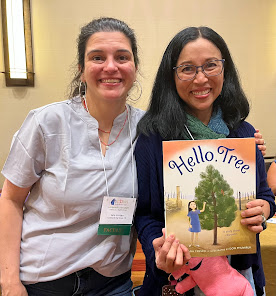
One of the best perks of being a member of SCBWI is getting to know so many talented children's authors and illustrators. It is a pure delight when I already love a book and then get to meet the author or illustrator behind that book at an SCBWI event. That happened a few years ago when I ran into Dow Phumirik at Second Star to the Right Bookstore. I already loved her masterfully illustrated Counting on Katherine: How: Katherine Johnson Saved Apollo Thirteen written by Helaine Becker. I was in the process of highlighting it as one of the titles I explored in my book, Story Frames for Teaching Literacy: Enhancing Student Learning Through the Power of Storytelling, so it was great fun to meet the illustrator. Since then I have become a big fan of anything illustrated by Dow, so I was thrilled to see another book of hers that I already loved at the Letters and Lines Conference Bookstore - Hello, Tree. Even more special, the author, Ana Crespo, was a conference presenter. She is an agent as well as an author and had wonderful insights to share during a pitch panel and a picture book critique seminar. In the photo below, Dow is pictured on the right and Ana is on the left.


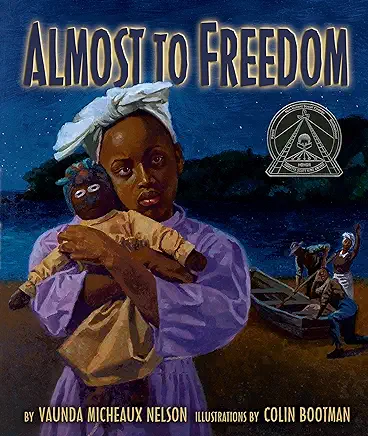
Hello, Tree fits perfectly with my blog theme for the year on stories about resilience. Although it is a work of fiction, it was inspired by the 2013 Black Forest fire in Colorado. Watch a video of Ana talking about the book HERE. What I love most about this book is that it is written from the perspective of the tree which makes it a wonderful selection to use with any age group to explore point of view. I suggest comparing it to Almost to Freedom written by Vaunda Micheaux Nelson (a friend from SCBWI New Mexico) and illustrated by Colin Bootman. Vaunda's book is a story about the Underground Railroad written from the perspective of a doll. Because they are short, using picture books for POV discussions provides the opportunity to discuss two or more complete works in a limited time frame.

I also got to catch up with Beth Anderson and Jolene Gutierrez. We presented an author/educator panel on "Using Narratives as a Bridge to Informational Text" at Reading in the City in Denver last April and will be presenting the same panel in Copper Mountain at Reading in the Rockies on September 30. Please attend if you happen to be at that conference sponsored by the Rocky Mountain Branch of the International Dyslexia Association. 

Last but surely not least, Andrea Wang, author of Watercress, was the keynote speaker. We all loved Andrea and her work before her book won the Caldecott, the Asian/Pacific American Award for Literature, and a Newbery Honor, so it has been especially exciting to watch her popularity as an author grow and expand. See the author panel below on promoting storytelling that Beth, Dow, and I did with Andrea before she and Watercress were so famous. 

Check out these blog posts:

Interview with Beth Anderson on The Resilience of English Language Learners.

Interview with Jolene Gutierrez on The Resilience of Bionic Beasts

Children's Author Panel on Promoting Storytelling with Dow, Beth, and Andrea.

Watch for upcoming blog posts where I will share more book titles from Letters and Lines.

Sign up for my newsletter to keep up with upcoming author interviews and book news. Visit the Sign Up Page on my website at www.wordtravelpress.com for details and discover free offers. 

Sunday, August 6, 2023

TOO MUCH! An Overwhelming Day - Book Launch

Too Much! An Overwhelming Day is a picture book by author/educator Jolene Gutierrez about what it feels like to be a child with sensory processing challenges. Too Much! fits well this year's blog theme of "Books About Resilience" because it provides so many practical suggestions for helping kids build skills and gain confidence in their ability to self-regulate. 

Jolene has experience as both a teacher and a librarian working with kids with autism and sensory processing issues. Most important, she has sensory processing difficulties of her own which she discussed at her book launch on Saturday, August 5 at Second Star to the Right bookstore in Denver, CO.  

Jolene's "Note to Caregivers and Educators" at the end of Too Much! provides useful tips about going from TOO MUCH! to JUST RIGHT. There are practical suggestions for what to do when a child is overwhelmed by specific types of stimuli like sound, textures, touch, and sight. The author's note provides definitions for the different types of sensory systems and ideas for helping adults to help children with identifying their sensory likes and dislikes. There is even a section on creating a sensory diet. 

Jolene invited Kaitlyn and Kayla, two delightful occupational therapists from the STAR Institute, to talk about sensory processing. They provided a checklist of "Red Flags of Disordered Sensory Processing" for infancy through adulthood.  I appreciated the perspective that their job is NOT to change a person's sensory integration profile but simply to give that person tools to be their best self and to find ways to self-regulate in difficult situations. 

One of the booksellers asked the OTs what Second Star could do to make their bookstore more accessible to kids with sensory integration issues.  Children's bookstores can be colorful and exciting places, but they can also be overstimulating. I think the suggestions made by the OTs are helpful for librarians and classroom teachers as well as bookstores:

SENSORY TIPS FOR BOOKSTORES, LIBRARIES, AND CLASSROOMS

1. Create calming corners with fewer stimuli where kids can snuggle up with a book or just take a few minutes to relax.

2. Provide an outdoor space if possible. Kids sometimes become overstimulated and benefit from going outside to center themselves. Outdoor spaces can be very calming to people experiencing dysregulation. 

3. When offering programs for children, make sure there are a variety of options for viewing (i.e. sitting in chairs, sitting on the ground, using other flexible seating options, or standing up). Be sensitive to the fact that some kids may need to get up and move around. Creative spaces near the event but on the fringe can provide opportunities for kids to engage to the extent that they are comfortable. 

4. Clapping at large events can be very loud and distressing. Before the event, encourage quieter ways of showing appreciation such as snapping fingers or waving hands. 

Learn more about the work of the STAR Institute at https://sensoryhealth.org/. Check out their pages for:

  • Understanding Sensory Processing
  • Symptoms Checklist
  • Continued Education for Professionals.

Jolene and I will be presenting an author/educator panel with Beth Anderson on Saturday, September 30 at the Reading in the Rockies Conference at the Copper Mountain Resort in Copper Mountain Colorado. The subject is "Using Narratives as a Bridge to Informational Text." Find out more about the conference and my other 2023 presentations (including ASHA and IDA) on my EVENTS Page.

Sign up for my newsletter HERE to keep up with articles, free activities, and news about my decodable book series HOT RODs (Higher Order Thinking through the Reading of Decodables).