Showing posts with label Dow Phumiruk. Show all posts

Saturday, March 21, 2026

COMPLEX SENTENCES MADE SIMPLE


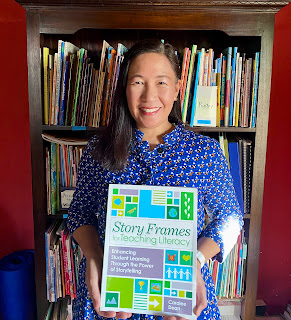
In my last post, Simple Sentences Aren't So Simple, I talked about combining simple sentences to create compound sentences using FANBOYS, the words: for, and, nor, but, or, yet, (and) so. This week, I'm taking a look at complex sentences and how the concept can be made simple by using picture book illustrations as well as a diagram from my book on narrative intervention - Story Frames for Teaching Literacy

The diagram above is from Chapter 8, "Toward a Deeper Understanding: Questioning and Comprehension Skills." Icons have been paired with Wh Questions: Who, What (is happening), What (things), Where, Which One, When, How, and Why to help students visualize these abstract concepts. The icons help with both comprehension and sentence writing. 


From Happy Songkran Day  - Used with permission by the author/illustrator

This month, I've been discussing Dow Phumiruk's picture book, Happy Songkran Day! The Thai New Year Celebration, to explore how students of all ages can use the story to celebrate the Thai New Year from April 13-15. Last week, I talked about how this illustration could be used to explore simple sentences. This week, I'm using the same illustration to talk about complex sentences. For a plot summary, see my post on A Story Frames Analysis of Happy Songkran Day.

After reading the story with your students, ask the questions below. Introducing complex ideas in an oral language discussion levels the playing field for students with reading and writing challenges like dyslexia. It's then easier for students to write about something they have discussed in class because they are working on the ideas for writing, separate from the mechanics of writing. 

Who is the subject of this picture? Tida
What did she do? washed 
How did she wash? carefully, with her mother
What is she washing? the sash
Which sash? her sister's special sash
Where is it happening? in the bucket, in the backyard, on the grass
When? on Songkran Day
Why? because Tida spilled peanut sauce on the sash.

Explain to students that, for a sentence to be complete, all that is needed is the WHO and WHAT they are doing.

Most Basic Simple SentenceTida washed.

Each additional question adds more information to that basic idea. Each time new information is added, demonstrate how the sentence expands.

Expanded Sentences:
  • Tida washed the sash.
  • Tida washed her sister's special sash.
  • Tida carefully washed her sister's special sash in the bucket with her mother.
  • Tida carefully washed her sister's special sash in the bucket with her mother on Songkran day.
The addition of the WHY question is what turns this sentence into a complex one. After students have discussed the Wh-Questions and their answers, ask someone to volunteer to put all the information together into one long sentence. Ask the other students to listen to make sure every WH question has been answered.

Complex Sentence: Tida carefully washed her sister's special sash in the bucket with her mother on Songkran day because she had spilled peanut sauce on it.

See the diagrams below from my last post for a better understanding of the difference between compound and complex sentences. They're from The Raven Remix Activity Book and illustrate the difference between using coordinating conjunctions to create compound sentences and subordinating conjunctions to create complex ones. Sign up HERE to get these two PDF graphics for FREE in my March 30, 2026 Newsletter. 


Note: The Raven Remix Activity Book: 50+ Activities and Games for Decoding, Reading Comprehension, Writing, and Speech includes 15 different activities to work on sentence structure.  

For Older Students

Asking "when" questions can also lead to the creation of a complex sentence by adding a dependent clause: before they went to the dance. It is a dependent clause because it contains both a subject (they) and a predicate (went). 

Note that before the dance would be a phrase because it doesn't include a subject and predicate.

Why it Matters

The further the subject (Lida) is from the predicate (washed), the harder it is for students to identify WHO is doing WHAT in the sentence. This confusion often leads to misinterpreting what is happening and poor comprehension. When students use illustrations to ground themselves in what is happening in a scene, they are better able to practice sentence elaboration, which supports both writing and comprehension. 


Tuesday, March 17, 2026

SIMPLE SENTENCES AREN'T SO SIMPLE

From Happy Songkran Day  - Used with permission by the author/illustrator

This month, I've been discussing Dow Phumiruk's picture book, Happy Songkran Day! The Thai New Year Celebration, to explore how students of all ages can use the story to celebrate the Thai New Year from April 13-15. This week, I'm using one of the illustrations from the book, graciously provided by Dow, to show how picture books can be used to teach both simple and compound sentence structure.

If you've read my Story Frames PLOT ANALYSIS of this story, you will know that this illustration depicts the moment when Tida and her mother are washing the stain out of Tek's new sash, which Tek plans to wear at the dance celebration that evening. Tida accidentally spilled peanut sauce on her sister's sash and was afraid she had ruined it. Read the book with students first to provide the context. For students both young and old, check out the compound sentences activity that follows. 

"I think about the water washing away my mistakes, and my breathing slows."

The sentence from the text above is considered compound because it consists of two simple sentences (independent clauses) combined with the coordinating conjunction "and."  

An independent clause can stand alone as a sentence. It contains a subject and a predicate (verb). See below how the two parts of the sentence could each be a sentence on their own. 

I think about the water washing away my mistakes.

My breathing slows.

Complex Sentences

While the example from the text is a compound sentence (Two independent clauses joined by the coordinating conjunction and), the example below is a complex sentence. 

Example: Tida washed the sash because it was dirty.

A complex sentence contains an independent clause (Tida washed the sash) and a dependent clause (because it was dirty). The second part is dependent because it depends on the first part to make sense. A dependent clause is introduced by a word like because, although, so (that).

The diagrams below from The Raven Remix Activity Book illustrate the difference. Sign up HERE to get these two PDF graphics for FREE in my March 30, 2026 Newsletter. 


Note: The Raven Remix Activity Book: 50+ Activities and Games for Decoding, Reading Comprehension, Writing, and Speech includes 15 different activities to work on sentence structure.  

Compound Sentence Activity

The illustration and sentence example above from Happy Songkran Day can be used to introduce the process of creating compound sentences. 

Both parts of the sentence in the example could stand on their own. This is what makes them independent clauses. When independent clauses are combined with a coordinating conjunction, one of the FANBOYS (for, and, nor, but, or, yet, (and) so), they create a compound sentence. 

Teaching sentence combining is one of the best ways to improve reading comprehension. It is often at the sentence level where comprehension falls apart, even for older students. Picture book illustrations provide an excellent opportunity to work on this concept, especially with struggling readers. The class can orally create two simple sentences based on the illustration and then use one of the FANBOYS to combine them. Consider how the sentences below, inspired by the illustration, could be combined. Which of the FANBOYS would you use? Which examples create compound sentences? Hint: Both parts of a compound sentence must have a subject and a predicate (verb).

Sentences:        Tida spilled peanut sauce on her sister's special sash.

                            Tida washed out the stain.

Combined A:  Tida spilled peanut sauce on her sister's special sash, but she washed out the stain.

Combined B:  Tida spilled peanut sauce on her sister's special sash but washed out the stain.

 A is a compound sentence because both parts contain a subject and a predicate. There is a comma separating the two independent clauses. B is still a simple sentence because the subject, she, has been removed. 

Deeper Dive for Older Students - Or Stop Here if it's TMI

But wait! Isn't breathing a verb? What about washing

Although washing could be considered a verb, in this context, it is part of the noun phrase, "the water washing away my mistakes." 

A noun phrase is defined as a group of words that functions like a noun, including any words that describe the head noun, such as adjectives. A noun or noun phrase may be replaced by a pronoun (it, he, she, they, you, etc) without changing the meaning of the sentence.

Washing helps to describe which water we are talking about. It's not the sewer water, the ocean water, or even the water in my glass. It's "the water washing away my mistakes." How do we know this is a noun phrase and not an independent clause? The whole phrase could be replaced by the pronoun "it." 

I think about it.

Also, note that the phrase "the water washing away my mistakes" is NOT an independent clause because it cannot stand alone as a sentence.

Those Tricky Verbs

In my book, Story Frames for Teaching Literacy, the late William Van Cleave wrote an excellent chapter on "Function Trumps Form: Sentence Level Instruction." He discusses how, rather than categorizing specific words into parts of speech, we need to look at the function of the word in a sentence. 

For the example of washing, observe how the word can represent different parts of speech:

1) Tida is washing out the stain. (verb - present participle with the helping verb is)

2) Bob put the pants in the washing machine. (adjective - to describe the type of machine)

3) Washing is hard work. (noun - gerund) 

The Never-Ending Sentence Game

Note that a simple sentence can be quite long. The example in Combined B above contains the verb phrase "washed out the stain." Without the subject, it is just a phrase. With the subject, it would be a clause: "She washed out the stain.

This sentence also contains the prepositional phrase "on her sister's special sash." A simple sentence may contain any number of phrases (noun, prepositional, verbal) as long as it only has one independent clause (subject + predicate combination). 

For fun, use the illustration above and add as many prepositional phrases as possible to create a ridiculously long sentence.

Example: Tida washed the sash with the water in the bucket on the grass next to her mother in the backyard during the Thai New Year in April...

Complex Sentences

In my next blog post, I will share a truly "simple" activity for creating complex sentences. But wait! Can a complex sentence writing activity actually be less complex than our exploration of simple sentences above? Yes, and I will show you how. 

Remember the complex sentence - Tida washed the sash because it was dirty.

Compare that sentence to our never-ending sentence above, and stay tuned for my next activity.

RELATED POSTS

Sign up HERE to receive my newsletter with FREE activities based on Story Frames and my decodable books, including the sentence graphics above.

Saturday, March 14, 2026

A STORY FRAMES ANALYSIS OF HAPPY SONGKRAN DAY


In last week's BLOG, I recommended using Dow Phumiruk's picture book, Happy Songkran Day! The Thai New Year Celebration to celebrate culture and diversity. It may be used for all ages to explore the Thai New Year celebrated from April 13-15. Read last week's blog post to learn more about how to use the book in the classroom. This week, I'll give a brief summary of the book using Storyboard elements from my book, Story Frames for Teaching Literacy. For more information about Story Frames, go HERE or visit Brookes Publishing.

BEGINNING:
1. Ordinary World - Tida is a sweet young girl who lives with her parents and her sister, Lek. She gets a little clumsy when she is excited.
2. Call and Response - Tida wakes up her sister, Lek, on April 13, to celebrate the beginning of the Thai New Year. 
3. Mentors, Guides, and Gifts - Tida's mother teaches her the true meaning of the Thai cleaning rituals as the story progresses.
4. Crossing - The family cleans their hands in jasmine water to wash away the sins of the old year in preparation for the new one. 
MIDDLE:
5. New World - They go to the temple to pour water on the Buddha statue.
6. Problems, Prizes, and Plans - The family prepares special foods like satay with peanut sauce for the celebration. The prize is the big dance that evening, where Lek will perform with other children. Tida makes a lot of mistakes while cooking because she gets excited and rushes through things. 
7. Midpoint Attempt - Tek returns from dance rehearsal and shows the family her special dress made for the occasion. Tida wants to show off her work and accidentally spills peanut sauce on Tek's sash. 
8. Chase and Escape - Tida runs to her room in shame.
END:
9. Downtime - Her mother sits with Tida and explains that everyone makes mistakes. The point of the cleansing celebration is to wash away mistakes and start each year anew.
10. Death and Transformation - Tida and her mother wash the sash and make it good as new.
11. Climax: The Final Test - Tida apologizes to Tek for having so many accidents. Her sister tells her that the New Year is a time for forgiveness.
12. Final Reward - Family and friends celebrate the new year with water balloons, squirt guns, and buckets of water, all symbols of cleansing. Tek's dance performance is a great success, and at a big dinner that night, Tida is proud that she does not spill anything.

RELATED POSTS

Read more about Story Frames for Teaching Literacy HERESign up HERE to receive my newsletter with FREE activities based on Story Frames and my decodable books. This month, newsletter recipients will receive my FREE activity Story Ad Lib #2: A Special Celebration.

Tuesday, March 10, 2026

CELEBRATING DIVERSITY AND THAI CULTURE WITH HAPPY SONGKRAN DAY

Get ready for the Thai New Year April, 13-15, by checking out this delightful picture book -  Happy Songkran Day! The Thai New Year Celebration, written and illustrated by Dow Phumiruk. It's available at Amazon or Bookshop.org (Where proceeds go to the bookstore of your choice).

One of the most enjoyable ways to introduce students to other cultures is to showcase their celebrations. This story explores the themes of forgiveness and washing away "sins" to start the new year, which are central to the Thai celebration. Rather than the heavy-handed notion of wrongdoing, the message is that we all make mistakes (both big and small) and have the chance to start over. The symbolism is conveyed through squirt guns, water balloons, and children pouring buckets of water on each other, reminding us not to take our blunders so seriously.

If you happen to be sharing this story in a location where it's still snowing in April, you might explore how your climate differs from Thailand's and how geography shapes culture.

Children's books often provide a quick and engaging way to share ideas, regardless of your students' ages. Happy Songkran Day is for ages 3-5, but the ensuing conversations can be adapted for any level. In addition, the author provides a list of resources, including children's books for older students, that may be used for comparison and further knowledge.

In my book, Story Frames for Teaching Literacy, Chapter 7 explores "From Story Writing to Expository Writing: Bridging the Gap With Narrative Nonfiction." Although Dow's book is a work of fiction, it explores a real-life celebration and includes many nonfiction elements that teachers can use to bridge the gap. There is a glossary, a list of resources for learning more about Thailand and Songkran, and an Author's Note with additional information. I had no idea the Thai calendar was 543 years ahead of the Gregorian Calendar. This April 13, 2026, Thailand is celebrating the year 2569.

Picture books also provide engaging ways to teach sentence structure, which I will discuss next week using an illustration from Happy Songkran Day.

RELATED POSTS 

A Story Frames Analysis of Happy Songkran Day

Simple Sentences Aren't So Simple

Complex Sentences Made Simple

Read more about Story Frames for Teaching Literacy HERESign up HERE to receive my newsletter with FREE activities based on Story Frames and my decodable books.

Wednesday, November 26, 2025

Highlights from NCTE25

This past weekend, I served on two author panels during the NCTE (National Council of Teachers of English) 2025 Conference. I also had a booth in the exhibit hall, where I had the opportunity to chat with educators about decodable books and the foundational components of reading (phonological awareness, morphology, vocabulary, sentence structure, and more). More and more educators are embracing the power of Structured Literacy to create lifelong readers. 

One of the highlights of the conference was catching up with old friends and acquaintances.


The activities I presented for my two panels may be found at the links below.

During my panel for "Poetry Clubs: Reading and Writing Poetry to Promote Inclusion and Improve Writing Skills," I shared an analysis of the structure of "The Raven" along with tips for creating POE POETRY SPOOFS.  Lesley Roessing, who has a Chapter in my book Story Frames for Teaching Literacy, invited me to join the panel. Other children's authors included Jo Hackl, Landra Jennings, and Laura Shovan.

My second panel, "Threads of Possibility: Author/Educator Panel for Dream Weavers," focused on using picture books for students of all ages. I shared how to write HAIKU STORY SUMMARIES, an activity from Chapter 10 of Story Frames entitled "Poetry: Exploring the Power of Language and Story Through Verse." Other panelists included Colorado authors Beth Anderson and Jolene Gutierrez, author/illustrator Dow Phumiruk, and New Mexico author Laurel Goodluck.

The most exciting announcement at the conference was the list of 2026 Notable Children's Verse Novels. I had the chance to read Radiant by my old New Mexico friend, Vaunda Michaeux Nelson, this summer, and I highly recommend it, along with the other books on the list.

Last but not least, I just had to take the opportunity for a photo op with the Big Blue Bear outside of the Colorado Convention Center and my decodable book, Hank the Tank a chapter book about a real bear whose life was spared through DNA analysis.


In 2026, my newsletter will focus on sharing stories and activities from Story Frames for Teaching Literacy. Sign up for my newsletter HERE so you don't miss any fun freebies.

Monday, November 10, 2025

Haiku Story Summaries and NCTE


If you are attending the National Council of Teachers of English (NCTE) conference in Denver, check out my author panel entitled "Threads of Possibility." I'm honored to be presenting with Colorado authors Beth Anderson, Jolene Guitaerriez, and Dow Phumirik. Joining us from New Mexico is Laurel Goodluck. I will be sharing a poetry writing activity from my book, Story Frames for Teaching Literacy: Enhancing Student Learning through the Power of Storytelling. 


The activity is from Chapter 10: Poetry: Exploring the Power of Language and Story Through Verse. Here are two examples from the book that use poetry to create a mini-book summary.


Can you tell what these two poems have in common? 

1. They are both based on narrative non-fiction picture books that are biographies.
2. They are both haikus with a 5-7-5 syllable structure

But there is more. Each line follows a specific pattern. Use this pattern with your students to create Haiku Book Summaries.  The example below is based on Six Dots: A Story of Young Louis Braille

Haiku Book Summary

Line 1: 5-syllable prepositional phrase
In a cold, damp school

Line 2: 7-syllable subject with adjectives out of order
Louis Braille, blind and alone

Line 3: 5-syllable verb phrase/predicate
Created a code

During the presentation, I will also share haiku based on the picture books of the other panelists. Here is one below from Beth Anderson's book, Hiding in Plain Sight: Kate Warne and the Race to Save Abraham Lincoln. This haiku is also a story summary. The book is illustrated by Sally Wern Comport and tells the story of a female detective who helped save President Lincoln from an assassination plot on his way to his inauguration. I always learn an interesting tidbit of history from Beth's books.


I will also be presenting on Friday morning at 9:30 on a panel discussing poetry clubs. Get more information HERE.

In 2026, the focus of my newsletter will be on sharing stories and activities from Story Frames. Sign up for my newsletter HERE so you don't miss any fun freebies.

Monday, September 18, 2023

Highlights of the Letters and Lines Conference for Children's Book Writers and Illustrators

Earlier this month I attended my first Letters and Lines Conference for Children's Writers and Illustrators. It is put on every year in Colorado by the Rocky Mountain Chapter of the Society of Children's Book Writers and Illustrators. I have attended many similar conferences while living in New Mexico, but this was my first Colorado conference. It was held at the Denver West Marriott in Golden.

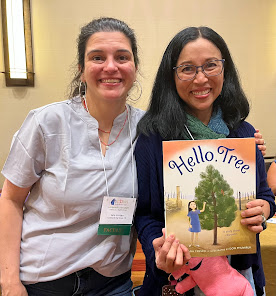
One of the best perks of being a member of SCBWI is getting to know so many talented children's authors and illustrators. It is a pure delight when I already love a book and then get to meet the author or illustrator behind that book at an SCBWI event. That happened a few years ago when I ran into Dow Phumirik at Second Star to the Right Bookstore. I already loved her masterfully illustrated Counting on Katherine: How: Katherine Johnson Saved Apollo Thirteen written by Helaine Becker. I was in the process of highlighting it as one of the titles I explored in my book, Story Frames for Teaching Literacy: Enhancing Student Learning Through the Power of Storytelling, so it was great fun to meet the illustrator. Since then I have become a big fan of anything illustrated by Dow, so I was thrilled to see another book of hers that I already loved at the Letters and Lines Conference Bookstore - Hello, Tree. Even more special, the author, Ana Crespo, was a conference presenter. She is an agent as well as an author and had wonderful insights to share during a pitch panel and a picture book critique seminar. In the photo below, Dow is pictured on the right and Ana is on the left.


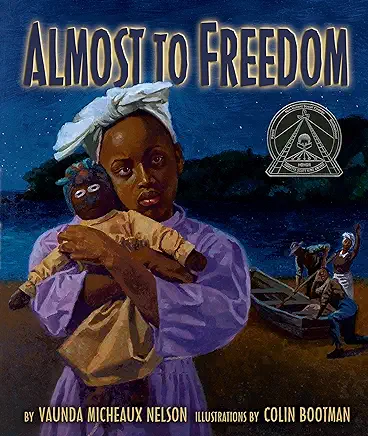
Hello, Tree fits perfectly with my blog theme for the year on stories about resilience. Although it is a work of fiction, it was inspired by the 2013 Black Forest fire in Colorado. Watch a video of Ana talking about the book HERE. What I love most about this book is that it is written from the perspective of the tree which makes it a wonderful selection to use with any age group to explore point of view. I suggest comparing it to Almost to Freedom written by Vaunda Micheaux Nelson (a friend from SCBWI New Mexico) and illustrated by Colin Bootman. Vaunda's book is a story about the Underground Railroad written from the perspective of a doll. Because they are short, using picture books for POV discussions provides the opportunity to discuss two or more complete works in a limited time frame.

I also got to catch up with Beth Anderson and Jolene Gutierrez. We presented an author/educator panel on "Using Narratives as a Bridge to Informational Text" at Reading in the City in Denver last April and will be presenting the same panel in Copper Mountain at Reading in the Rockies on September 30. Please attend if you happen to be at that conference sponsored by the Rocky Mountain Branch of the International Dyslexia Association. 

Last but surely not least, Andrea Wang, author of Watercress, was the keynote speaker. We all loved Andrea and her work before her book won the Caldecott, the Asian/Pacific American Award for Literature, and a Newbery Honor, so it has been especially exciting to watch her popularity as an author grow and expand. See the author panel below on promoting storytelling that Beth, Dow, and I did with Andrea before she and Watercress were so famous. 

Check out these blog posts:

Interview with Beth Anderson on The Resilience of English Language Learners.

Interview with Jolene Gutierrez on The Resilience of Bionic Beasts

Children's Author Panel on Promoting Storytelling with Dow, Beth, and Andrea.

Watch for upcoming blog posts where I will share more book titles from Letters and Lines.

Sign up for my newsletter to keep up with upcoming author interviews and book news. Visit the Sign Up Page on my website at www.wordtravelpress.com for details and discover free offers. 

Tuesday, January 25, 2022

WATERCRESS WINS BIG AT ALA

Caldecott Medal Winner
Newbery Honor Book
APALA Award Winner 

I'm so excited to share the news that Watercress, written by Andrea Wang and illustrated by Jason Chin, received three major book awards this week at the American Library Association 2022 Midwinter Meeting. Hopefully, you've heard of the Caldecott and Newbery Awards, but you may not be familiar with the APALA award from the Asian Pacific American Librarians Association. Its mission is to address the needs of Asian/Pacific American Librarians and the communities they serve.

In early summer of 2021, Andrea appeared on a panel with me, author Beth Anderson, and author/illustrator Dow Phumiruk. The topic was on Promoting Storytelling With Your Kids. The discussion and video are available on my blog with a link to the FREE PDF of the handout - Picture Books For Reminiscing. The handout includes questions for each of the picture books we discuss during the panel including Watercress. These questions may be used at home or in the classroom for any age group to stimulate discussing and writing about about personal experiences. The panel event was hosted by a local Denver bookstore, Second Star to the Right. If you are in the Denver area, check and see if they still have signed copies of Watercress available. I'm sure they are going fast!


I was not surprised that Watercress won the Caldecott given to "... the artist of the most distinguished American Picture Book for Children." Jason Chin's masterful watercolor illustrations are the perfect accompaniment to Andrea's story - an account of a personal childhood experience picking watercress from the side of the road with her Chinese immigrant parents. I was surprised and delighted, however, to learn that this quiet yet powerful picture book also won a Newbery Honor. Newbery books are typically for older students. Take for example, the recent Newbery Medal winner, The Last Cuentista, by Donna Barba Higuera. This novel for ages 10-14 is a bit more typical of the age range of books that usually win a Newbery. Read more about all of the 2022 Newbery and Caldecott Medal and Honor winners at ala.org 

What excites me most about Watercress winning a Newbery Honor, is that it demonstrates that narrative non-fiction picture books are not just for little kids. I have long been an advocate for promoting the use of picture books with older students. I hope that this award will encourage librarians and other educators to share Watercress, Unspeakable: The Tulsa Race Massacre (A Caldecott Honor Book), and other compelling and important picture book titles with older elementary school students and teens.

For specific tips on sharing these and other narrative non-fiction picture books with teens, see my article - Not Just for Little Kids: Five Reasons to Use Picture Books with Older Students over at Beth Anderson's blog. She was another author on the panel with Andrea Wang. Watch for Beth's new book, Revolutionary Prudence Wright: Leading the Minute Women in the Fight for Independence illustrated by Susan Reagan available February 1. Preorder now! Read the blog article by Sandy Brehl to learn more about the book.

The book giveaway on Beth's blog ended in November, but the tips are still invaluable. The winner of that giving away was Lillie Pardo, an intervention specialist teacher in California. Congratulations, Lillie!

To receive a free Fill-In-The-Blank Story Template sign up for my newsletter HERE.

Sunday, July 25, 2021

Children's Author Panel on Promoting Storytelling


Watch the video HERE. 

Thanks to everyone who joined me on June 1 along with Lauren Casey from Second Star to the Right Bookstore and Colorado authors Andrea Wang, Beth Anderson, and Dow Phumiruk for our author panel on Promoting Storytelling with Your Kids. It was a wonderful event. If you missed it the recording is now available above. 

In the first half of the video, we talk about tips for writing personal narratives including using picture books as a conversation starter between caregivers and children. You may download a FREE PDF of my handout - Picture Books For Reminiscing. It includes questions for each of the picture books we discuss. These questions may be used at home or in the classroom to stimulate a discussion about personal experiences. Specifically for teachers, download the PDF: Writing Personal Narratives: Using Narrative Nonfiction Picture Books as Inspiration for Telling Your Story.

I've included an excerpt below of our Q&A at the end of the video which Lauren moderated. It starts about 25 minutes into the recording.

Lauren: How do you find the courage to share what you have created.

Carolee: This is a very good question, especially for kids. I remember being a kid and not wanting to stand out, not even in a good way. We don't want to be too dull, but we don't want to be too bright either. We don't want to be too tall and we don't want to be too short. One of the things that helps us to share our work is finding people we can take that risk with - sharing a little bit of ourselves and our story with people we can trust. When we are back in school it would be wonderful if we were writing more personal stories and sharing them in the classroom Validating our experiences and celebrating how different we all are helps us create connections. Today we've been talking about very different stories about people who lived before us or lived in very different places, but we each relate to each of these stories because of that connection. We need to get to the place where that connection is more important to us than our fear of rejection. Our part is that when we hear someone else's story, we let them know that is safe. We give them that acceptance. Hopefully, when it comes back around to us, someone will give us that courtesy as well.

Beth: Can I add something to that? The most significant experience I had as a teacher in writing with my students was when we were writing personal memoirs and I wrote with the kids. This applies across the board whether it's with family or in the classroom, whether it's written or whether it's oral. We all just wrote. And when I shared my memoir piece and my voice cracked at the end, and they saw me vulnerable, sharing a piece of my life and how it had an emotional impact on me, it opened up that safe place and they all shared miraculous stories of their lives. These were all immigrants and refugees. People who had very different kinds of experiences that they were not willing to share usually. I think that as adults, if we open up that space, we not only share family stories that are personal to our families that can be passed along, we create that safe space to connect at a deeper level and let kids share those emotional experiences. 

Andrea: I think it is also important to remember that being brave does not mean that you aren't scared. I was always an incredibly shy kid and wouldn't show my writing to anybody except the teacher because you have to do that. Then the teacher in my third-grade class decided that she was sending all of our poems to the town newspaper, and they were all printed. That was a defining moment in my life because I thought, "Wow, my name is in the paper. I've made it." From then on it wasn't so bad because people were complimenting all of us. It was a safe place. It was a very lovely town. With Watercress and it being such a personal story, I've been afraid since the moment that I sent it to my agent. I was essentially revealing my heart to everyone. But you really do have to embrace that vulnerability that we've been talking about. That allows other people a turn to be brave and share their own stories. That's what I really hope that Watercress does, is to encourage everybody: parents, caregivers, and kids, to share their stories. 

Dow: I love everything that everyone has said. I was going to add that you can be scared, and maybe the time isn't right to share your story, and that's okay, but when you meet that favorite teacher or that good friend, or a family member that you really connect with, that's a time to test it out. Go ahead and share things. You might be surprised. You might think that it's awful or it's embarrassing but when you share it with someone you trust and who is supportive of you, you might get a response that encourages you to keep going and keep writing. They may share their stories back with you. So give it a try. For me, I didn't feel like I wrote any stories that I wanted to share except maybe in fourth grade. Then there was a big gap until I was well into my forties before I really shared it as an adult because I didn't feel like I had anybody who really connected with me and who I was until I joined a bunch of creative people in the Society of Children's Book Writers and Illustrators. But it doesn't have to take that long. Take your chances. Find people you trust who will support you and show them what you are up to. You will be surprised. I'll bet they're going to encourage you.

Lauren: Those are such great answers. I love this so much especially because I know that we reach so many educators and so many parents who had to educate unexpectedly this school year. These are all such important messages. Something else that we get asked a lot that I would like everyone to share briefly is who inspires you? If you get stuck writing, what book do you grab or what author do you reach for to help those creative juices.

Dow: I illustrate more than I write so I look at art. I look at work from past Caldecott winners. The beautiful pieces that get me motivated are just so beautiful to look at. I imagine how I could create something similar. It never matches, but I imagine how I can attempt to portray that feeling for people who are viewing my work. That's what I try to do.

Carolee: On the heels of what Dow said, I like to read poetry. Just like a picture is a snapshot, a poem is a snapshot. Sometimes it's hard to get inspiration from an entire book. It takes so long to read it. I'm a speech-language pathologist and with my own students, I may only see them once a week. I look for something short to share with them. I'm going to pick something short like one of these picture books we've discussed today from my book, Story Frames for Teaching Literacy. A picture book is short, it's crisp, it's to the point, and yet it's so beautifully written and touches on something meaningful in a very short bit of time. Poetry is the same way. There is so much metaphor and symbolism in poetry. You can read one poem and have the main idea. I like to read something short and then just meditate on it or read something and take a walk, be out in nature where the world is full of metaphors that symbolize so much of our experience. 

Andrea: Right now I'm most interested in writing more about culture and identity, so what I've been doing is I've been reading non-fiction books about the history of Asian America and Asian American Experiences so I turn to those books that discuss the making of Asian America. I will even watch documentaries. PBS has an excellent documentary about Asian Americans. I also listen to podcasts. There is one called Asian Enough that I really love. They interview Asian Americans from all walks of life. I will try to listen and take notes at the same time. It could be something completely unrelated, but it jogs something in my brain and I get an idea. Lots of different kinds of media. Not just books. 

Lauren: I love that, bringing it in from all over. So you just keep a notebook with you then?

Andrea: Or my phone.

Lauren: Right. It's not 1992. 

Beth: Sometimes I get stuck because I don't know enough. I'm too limited in my thinking. So I try to look at the wider picture, to get into the setting. I write a lot of history so I do a lot of research to try and understand the time and the place and the traditions and the beliefs, all of the things that are at work in that person and understanding their life. If it's an idea that is theme-related, I read other articles about that topic and it exposes me to different viewpoints and makes me jog my thinking a little bit. So that's usually what I do. Or take a walk.

Lauren: I love the walks, yes! To end, I know that you all gave really great advice when you were speaking about different tips that you have for parents, but I wonder if we could speak to educators specifically. We love our educators. We work with so many schools and we love them all. What advice do you have for educators, especially after this hard year? Virtual school was rough. People may not be feeling like they want to share their stories. I think a lot of people are shut down. Do you have any advice for the classrooms or for home learners? How can they open that back up? How can we break out of the pandemic blues?

Andrea: I have a writing exercise that I give out when I do school visits and educators can use this too. Taking a cue from Watercress, write about a memory, but choose one where your feelings change from before the activity to afterward and that's really where your story lies. For example, in Watercress, the girl in the story feels very embarrassed and confused about why her parents are making her pick watercress. By the end, when her mother shares her own story from her past about her relationship to watercress growing up during the Great Famine in China, the girl then gains a new understanding and awareness and her feelings have really changed by the end. She's much more connected to and proud of her heritage. Remind kids that they can be proud of who they are and where they are from.


Beth: I think that the best writing comes from writing you really care about that really fires you up whether it's anger or passion or love. If it is hooked in emotionally it goes much deeper and it's not just for the teacher. It's more for you. Teachers know that the best way to get kids to learn is to connect with them and to reach them on an emotional level. If you can make assignments touch on the emotional level like - Why does this matter? Why do you care about this? Whether it's science or social studies or whatever it is. One of the things I've talked with kids about during my visits with Lizzie Demands a Seat is about how your time and place affect who you are. Interpreting a fact, like she's a teacher, became very different. When you look at the times and the place, she actually was an activist as a teacher. It totally changes motivation and everything about the story. I say that if you don't think that your time and place affect you, think about your life now with the pandemic. You will never think the same. You will always see things differently. This will forever affect your view of the world and this will be something you tell your kids about. That's how you become you. Get it on the page or in your speech or in whatever you're doing. Let that emotion connect you.

Carolee: I love the books that we've talked about today. These are what I use when I work with students and I tend to work with students who have pretty significant learning challenges. As a speech-language pathologist, I specialize in working with students with dyslexia, so when I read a book it's not just to find the main idea or answer detail questions, I tell my students, "I have something so special to share with you today. It's a book about a woman who saves the Apollo 13 mission." I only share books I love and it just to happens that they are usually narrative non-fiction picture books that are absolutely full of vocabulary, main idea, with all of those things we want kids to learn without it being drill and kill and now let's have a test over the book. You can't help but learn from the story because it's so exciting. Sometimes we'll just analyze an illustration. We will talk about who is the subject of the picture. What are they doing? Where is it happening? When? Why? That is basically the construct of a complex sentence. We use that conversation to build how complex sentences are made from either looking at the pictures or reading the book. I would challenge teachers to find books you love that you cannot wait to share with your students. That enthusiasm is contagious. If our students learn nothing more from us than a love for stories, then we will have done a great thing because the stories do the work. Kids learn so many life lessons from those stories, and if we can encourage that love of stories by loving stories ourselves, and sharing that love and sharing that enthusiasm, then we will have done a great thing. 

(Side Note: Obviously, there is much more work that we need to do besides simply fostering a love of books, especially for kids who struggle with learning to read, but sharing our enthusiasm will help remind our students of why all of that hard work is important.)  

Lauren: I'm so glad we are recording this my friends. This is amazing advice.

Dow: I love that you can encourage yourself to bring your own enthusiasm for books to the classroom. I think that is great advice. Just in case you hadn't heard anybody else on this soapbox yet - let children choose their own books to read. Let them pick what they are interested in be it a picture book or a graphic novel or YA books that are banned in a few states. These are safe ways for children to learn as they make that discovery on their own with a book of their choice. It's going to stick with them and they're going to become lifelong readers and learn about the world that way. Picture books are my favorite and I think that adults and children alike need picture books. I think the world would be a kinder, gentler place if we all embraced picture books. Let children pick as well what they prefer. 

Lauren: I love that, and I think I know a store where these children can go to pick their own books. We might just have a place on South Pearl Street. Thank you all so much for being here today and for sharing such amazing advice. Carolee, thanks for orchestrating this and putting us all together and getting us out in front of our audience. Thank you!

Carolee: I could not have done it without the great material and the great authors that are here with us today sharing their amazing talent.

Lauren: Once again friends, my name is Lauren from Second Star to the Right. Thank you so much for joining us here today. Happy reading and we'll see you next time. You can find these books on our website:

Check out books from our Story Frames Panel at Second Star to the Right Books:

Story Frames for Teaching Literacy: Enhancing Student Learning Through the Power of Storytelling by Carolee Dean 

Watercress by Andrea Wang

Magic Ramen: The Story of Momofuko Ando by Andrea Wang

An Inconvenient Alphabet: Ben Franklin and Noah Websters Spelling Revolution by Beth Anderson 

Lizzie Demands a Seat: Elizabeth Jennings Fights for Streetcar Rights by Beth Anderson

Counting on Katherine: How Katherine Johnson Saved Apollo 13 written by Helaine Becker and illustrated by Dow Phumiruk

Titan and the Wild Boars: The True Cave Rescue of the Thai Soccer Team written by Susan Hood and Pathana Sornhiran and illustrated by Dow Phumiruk.

To receive a free Fill-In-The-Blank Story Template sign up for my newsletter HERE.

To watch the video on Tips for Leisure Reading by New Mexico authors, go HERE.