Showing posts with label Dyslexia. Show all posts

Saturday, March 21, 2026

COMPLEX SENTENCES MADE SIMPLE


In my last post, Simple Sentences Aren't So Simple, I talked about combining simple sentences to create compound sentences using FANBOYS, the words: for, and, nor, but, or, yet, (and) so. This week, I'm taking a look at complex sentences and how the concept can be made simple by using picture book illustrations as well as a diagram from my book on narrative intervention - Story Frames for Teaching Literacy. 

The diagram above is from Chapter 8, "Toward a Deeper Understanding: Questioning and Comprehension Skills." Icons have been paired with Wh Questions: Who, What (is happening), What (things), Where, Which One, When, How, and Why to help students visualize these abstract concepts. The icons help with both comprehension and sentence writing. 


From Happy Songkran Day  - Used with permission by the author/illustrator

This month, I've been discussing Dow Phumiruk's picture book, Happy Songkran Day! The Thai New Year Celebration, to explore how students of all ages can use the story to celebrate the Thai New Year from April 13-15. Last week, I talked about how this illustration could be used to explore simple sentences. This week, I'm using the same illustration to talk about complex sentences. For a plot summary, see my post on A Story Frames Analysis of Happy Songkran Day.

After reading the story with your students, ask the questions below. Introducing complex ideas in an oral language discussion levels the playing field for students with reading and writing challenges like dyslexia. It's then easier for students to write about something they have discussed in class because they are working on the ideas for writing, separate from the mechanics of writing. 

Who is the subject of this picture? Tida
What did she do? washed 
How did she wash? carefully, with her mother
What is she washing? the sash
Which sash? her sister's special sash
Where is it happening? in the bucket, in the backyard, on the grass
When? on Songkran Day
Why? because Tida spilled peanut sauce on the sash.

Explain to students that, for a sentence to be complete, all that is needed is the WHO and WHAT they are doing.

Most Basic Simple Sentence: Tida washed.

Each additional question adds more information to that basic idea. Each time new information is added, demonstrate how the sentence expands.

Expanded Sentences:
  • Tida washed the sash.
  • Tida washed her sister's special sash.
  • Tida carefully washed her sister's special sash in the bucket with her mother.
  • Tida carefully washed her sister's special sash in the bucket with her mother on Songkran day.
The addition of the WHY question is what turns this sentence into a complex one. After students have discussed the Wh-Questions and their answers, ask someone to volunteer to put all the information together into one long sentence. Ask the other students to listen to make sure every WH question has been answered.

Complex Sentence: Tida carefully washed her sister's special sash in the bucket with her mother on Songkran day because she had spilled peanut sauce on it.

See the diagrams below from my last post for a better understanding of the difference between compound and complex sentences. They're from The Raven Remix Activity Book and illustrate the difference between using coordinating conjunctions to create compound sentences and subordinating conjunctions to create complex ones. Sign up HERE to get these two PDF graphics for FREE in my March 30, 2026 Newsletter. 


Note: The Raven Remix Activity Book: 50+ Activities and Games for Decoding, Reading Comprehension, Writing, and Speech includes 15 different activities to work on sentence structure.  

For Older Students

Asking "when" questions can also lead to the creation of a complex sentence by adding a dependent clause: before they went to the dance. It is a dependent clause because it contains both a subject (they) and a predicate (went). 

Note that before the dance would be a phrase because it doesn't include a subject and predicate.

Why it Matters

The further the subject (Lida) is from the predicate (washed), the harder it is for students to identify WHO is doing WHAT in the sentence. This confusion often leads to misinterpreting what is happening and poor comprehension. When students use illustrations to ground themselves in what is happening in a scene, they are better able to practice sentence elaboration, which supports both writing and comprehension. 


Friday, September 26, 2025

Structured Literacy in the Science Classroom - Part 2 (Morphology)

Image Courtesy of Pixabay

The Sharpened Vision of the International Dyslexia Association promotes Structured Literacy in every classroom everywhere and around the world, but how does that apply to subjects like science for the upper grades? 

It's challenging to envision a high school chemistry teacher dedicating time to work on decoding or phonics, so how do those educators incorporate Structured Literacy into their curriculum without sacrificing precious instructional time?

One avenue for promoting Structured Literacy and the Science of Reading in every classroom is through the development of morphological awareness. 

Earlier this month, at the end of my Structured Literacy Symposium on Vocabulary and Background Knowledge for California's Tri-County Branch of IDA, one of the participants shared a personal story from her years of teaching experience.

When she was a middle school general education science teacher, she had little understanding of Structured Literacy. Even so, she was actively incorporating a Structured Literacy approach. When an unfamiliar word appeared in the science lesson, rather than asking students to memorize the textbook definition, she broke down the word into morphological units and initiated a discussion about connecting base elements, prefixes, suffixes, and Greek combining forms to terms already familiar to the class. 

By connecting unknown words to known words, she drew on what students already understood about the word. This practice aligns with the strategy of utilizing background knowledge to create student-friendly definitions, as outlined in Bringing Words to Life: Robust Vocabulary Instruction by Beck, McKeown, and Kucan. 

In my August BLOG post, I shared their three Tiers of Vocabulary - not to be confused with the Multi-Tiered Systems of Support in the diagram below. Please read that blog post for more information about Tiers of Vocabulary.

Using morphological awareness to teach vocabulary in upper-grade science classes is a logical choice that supports both the curriculum and Structured Literacy.  Many scientific terms originate from Greek and Latin. This emphasis also aligns well with a Structured Literacy approach. The free infographic found at https://dyslexiaida.org/infographics/ shows how vital morphology, vocabulary, background knowledge, and critical thinking are to reading. 

Examining the "Who" section of the infographic, general education classroom teachers can effectively utilize morphology instruction with both average-performing students and those who may require additional support. Specialists, such as reading teachers and speech-language pathologists, can also do a deeper dive into that same vocabulary when they meet with students in small groups or 1:1 for Tier 3 support.

Examining the "What" section of the Infomap, morphological awareness requires critical thinking and fosters growth in both vocabulary and background knowledge.

"How" a teacher approaches the teaching of morphology may incorporate several elements of both direct/systematic and mastery-oriented strategies.

As an example, when teaching a word like subaquatic, which may not be automatically generalizable to other subjects, focus on the morphemes that do appear across subject areas and are related to words the student already understands. These types of conversations are engaging, require students to draw on background experience, and incorporate morphological problem-solving. After introducing the word, introduce the parts.

SUB = UNDER: submarine, subtract, substitute, submit, suburban.

AQUA = WATER: aquarium, Aqua Man

TIC = A suffix that turns a word into an adjective that describes a quality or characteristic: fantastic, aromatic

Then, encourage students to think of other words containing those elements. If they watch crime shows, they may be interested to know that an unsub is an "unknown subject" or an unidentified perpetrator. Although the word "subaquatic" may not transfer easily across topic areas, the word "subject" certainly does.

A visit to etmonline.com reveals that ject means to throw. Sub+ject therefore means to throw under, bind under, or that which lies beneath. That meaning makes sense when thinking about the king's subjects, or how a younger brother might subject his older brother to a barrage of silly jokes. It takes a bit more imagination to consider math as a subject that lies beneath, but in that context, it might make sense to think of the student throwing themself under, or submitting to a course of study.

Once you have a list of "sub" words, make a matrix like the one below, created with Mini Matrix Maker at 

www.neil.ramsden.co.uk/spelling/matrix.


After exploring the Word Sums, students can create sentences or answer questions based on the shades of meaning of the various words.

Last week, I explored the subject of Structured Literacy in the Science Classroom with a look at Haiku and Syllable Structure. Check it out for more ideas on how to use Structured Literacy in the science classroom.

Sign up for my newsletter to receive activities for my ongoing COR (Components of Reading) series HERE. 

Wednesday, May 15, 2024

Next Generation Indie Book Award Winner

My Hank the Tank Activity Book has just been named a finalist for the Next Generation Indie Book Awards in the category of Activity Books. The awards banquet will be June 28th in San Diego at the same time as the American Library Association (ALA) Conference. Speaking of ALA, if you happen to be attending, stop by the IBPA (Independent Book Publishers of America) Booth # 1837. The Hank the Tank Activity Book will be on display and so will the decodable book upon which it is based, Hank the Tank: Animal in the Spotlight.  Many other unique books by independent publishers will also be available. 

It's exciting that decodable books and the materials that support those resources are getting more and more attention from the larger book industry. If you'd like information about decodable books, see my web page entitled Choosing the Right Decodable Books for Your Students. I talk about what decodable books are and where to find them. For information about how to set up literacy hubs and acquire decodable books for your school or local library, visit Teach My Kid to Read. 

The Hank the Tank Activity Book (available at Amazon & Barnes and Noble) is based on Hank the Tank: Animal in the Spotlight, a decodable chapter book, available now in hardcover, paperback, audiobook, and e-book formats at  Amazon.  You can even read it for free on Kindle Unlimited if you have a membership. You may also find the hardcover and paperback versions at Barnes & Noble or you may order them from your favorite local bookstore. Read more about how to credit local bookstores with online purchases HERE. In addition, Many of the games from the Activity Book are available as digital Boom Cards. See the Hank the Tank Bundle. It includes 15 decks/games and several are FREE.

Preview the first part of the story as well as some of the activities in this FREE ACTIVITY GUIDE PDF DOWNLOAD.

Sign up for my newsletter HERE and receive a free copy of my first decodable book, No Gift for Man. Don't miss any of the fun-filled activities I'm creating for A Year of AWE: Authentic Writing Experiences.

Tuesday, February 20, 2024

My First Podcast


I'm excited to announce my first podcast which I recorded with Brainspring while I was at the IDA Literacy and Learning Conference last October. They conducted interviews with several of the IDA speakers and are currently releasing those podcasts. 


Brainspring is an organization that trains teachers to become experts in multisensory instruction. They also offer tutoring services to students with dyslexia. In their Orton-Gillingham podcast, they chat about all things related to multisensory education, dyslexia, and how they can bring literacy to everyone. 


My topic is how my combined experiences of being a children's author and a therapist working with dyslexic students led me to write decodable books. You may check out my interview along with others that may be of interest at the link below.


Here’s the link: https://www.podbean.com/eas/pb-xaqja-1587788


Sign up for my newsletter HERE and receive a free copy of my first decodable book, No Gift for Man. That way you won't miss any of the fun-filled activities I'm creating for A Year of AWE: Authentic Writing Experiences along with interesting facts celebrating A Year of Poe. 

Wednesday, November 8, 2023

Exploring Authentic Writing Experiences at ASHA

I will travel to Boston, MA, in one week for the American Speech-Language and Hearing 2023 Conference (#ASHA2023).  If you are going, check out Booth 1254 for Word Travel Press along with my presentation on Saturday afternoon from 4-5 p.m. entitled "Story Frames for Teaching Literacy: Using Narratives as a Bridge to Informational Text." The presentation is largely based on Chapter 7 of my Story Frames book - "From Story Writing to Expository Writing: Bridging the Gap with Narrative Nonfiction," but the strategies I discuss may be used with any program. 

I gave a similar presentation twice this year already in author/educator panels with Jolene Gutierrez and Beth Anderson. See my interview with Beth, where she talks about The Resilience of English Language Learners. Then check out my blog post with Jolene on The Resilience of Bionic Beasts. I'm excited to announce that CCIRA has asked us to present this same author panel on February 8-10, 2024 in Westminster, CO. The specific day will be determined later. All the attention on this topic confirms my belief that students need help making the leap from stories to informational text in both reading and writing.
In addition to discussing ways that narrative strategies may be used to enhance understanding of informational text and vice versa, I will also discuss ideas for exploring authentic writing opportunities, including crafting a "Letter to the Author" that follows a format similar to a short essay. One of the most successful writing activities I ever conducted for struggling learners was in a tenth-grade special education Language Arts class. It was a Letter to Author Cynthia Leitich Smith that arose organically after we read the graphic novel based on her book, Tantalize. Because they knew their letters were going to a real person, the author of a book they enjoyed, everyone participated in a way I hadn't seen with any other writing activity. Students were eager to edit because they wanted their letters to be perfect. Some even brought in special stationery.

I always get excited when I learn about opportunities for students to explore authentic writing experiences. Jill Lauren, creator of the Whole Phonics series of decodable texts, is a member of the Decodable Book Alliance that I joined recently when I started writing decodable books. Jill is holding a contest through November 30th where students can win a puzzle by illustrating a scene from one of her books and writing a one-sentence description. Find out more HERE. If you don't have any of Jill's books, don't worry. You can get a free copy of A Pig and His Wig by visiting her website at  https://whole-phonics.com/ and joining her mailing list. She offers 4 other decodable texts on her partnership page with ReadWorks. These free titles include Zac's Pal (short "a"), Rod's Box (short "o"), Buzz, Buzz (short "u"), and Get Up! (short "e"). You will want more of her books, but you can start now with these for free. 
Often, decodable books lack real-world application, but Whole-Phonics does a good job of bridging this gap by partnering with ReadWorks to provide background knowledge. That's exactly the gap I'm attempting to fill with my HOT ROD decodables for older readers. 

Writing contests provide simple but compelling opportunities for authentic writing. If you are wondering what decodable books are, check out the article on my website at https://www.wordtravelpress.com/. Go to the tab at the top for Resources>Decodable Books. You can also learn about the HOT ROD series (Higher Order Thinking through the Reading of Decodables).

I was already working on a December Poetry Giveaway to encourage reading and writing over winter break when I read about Jill's contest,  I decided to turn my Poetry Freebie into a contest starting on December 1 after Jill's contest ends. If you want to be sure to get the latest information about that contest, as well as other freebies, articles, and book news, join my Author Newsletter list. You will automatically receive a PDF of my first decodable book, No Gift for Man. You may unsubscribe at any time.

The Decodable Book Alliance works in conjunction with Teach My Kid to Read which is a 501c3 dedicated to educating librarians about the importance of decodable text. My next post will be about their experiences at the recent New York Library Association Conference, so stay tuned.

HINT: My December poem giveaway is called, A Long Winter's Nap and was inspired by a mother bear hibernating in a most unusual location.

Sunday, May 29, 2022

Children's Books for Better Speech and Hearing Month

Sharing books about main characters with disabilities promotes awareness and acceptance. The three books I will be discussing today also happen to have connections to my summer series on Tips for Connecting Books to Summer Fun. They are all fiction titles, but one is about gardening (albeit in dystopian Australia). One is about wild birds, and another ends with a concert in the park.

A good place to find some of the best books featuring characters with disabilities is on the American Library Association (ALA) website page for the Schneider Family Book Award. The purpose of the award is to honor an author or illustrator for a book that, "...embodies an artistic expression of the disability experience for child and adolescent audiences." Every January, the ALA announces winners in the age categories of 0-8, 9-13, and 14-18. Some of the highlights for the recent 2022 awards are below.

The winner in the young children's category was My City Speaks. Photographer Darren Lebeuf and paper artist Ashley Barron have created a visually engaging tale of a girl with a visual impairment and her father as they travel to familiar spots in their city (including a community garden) and finally arrive at a concert stage in the park where she plays the violin.

The winner in the middle-grade category was A Bird Will Soar, by Alison Green Meyers. It is written from the perspective of Axel, a boy on the autism spectrum who loves birds but often finds family confusing. He makes sense of the people around him by comparing them to birds. The insight into Axel's inner thoughts and feelings is part of what makes this book so remarkable. When a storm destroys an eagle's nest, Axel must help a struggling eaglet to heal. The story is filled with poems and lots of interesting bird facts. 

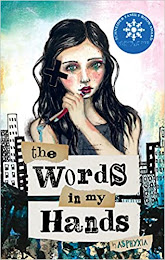
The winner in the teen category was Words in my Hands, written and illustrated by Asphyxia and published by Annick Press. It is an illustrated novel told in a combination of text, paint, collage, and sketch about a girl who is deaf and is living in a slightly futuristic world in Australia filled with food insecurity, political upheaval, and environmental turmoil. It is dystopian but at the same time frighteningly realistic. Ultimately it is a story of resilience and hope as Piper, the main character, strives to create a sustainable garden and find her "voice." Asphyxia, the author/illustrator, is deaf and has included a "Dear Reader" note at the end of the book that shares ideas for how the hearing can be more sensitive and inclusive of people with hearing challenges.

For books about gardening for younger readers, see the books in last week's blog post about Books on Community Gardening and Pollination.

Since May is Better Speech and Hearing Month, you may want to check out the book list I created last November about Children's Books Featuring Main Characters with Speech, Language, Learning, and Hearing Challenges. Because many kids with speech and language challenges also struggle with reading, you may also want to share stories from my list of Children's Books Featuring Main Characters with Dyslexia. Don't forget the list I shared in April for Autism Awareness Month. 

Watch for more book titles and tips including activities for Real-World Writing by following this blog. Sign up for my newsletter HERE to receive the free writing template for Travel Trouble.

Sunday, October 29, 2017

Four Picture Books About Real Kids Facing Disability, Illness and Adversity

In my work with students with disabilities, I have often used stories about real kids facing real challenges. I especially like the picture book format because this genre gets to the heart of a story so quickly and eloquently. When these books follow a narrative structure, I have the opportunity to talk about plot and story form as well as themes of perseverance and hope.

Four excellent picture books about real kids facing disability, illness and adversity are below:


Six Dots: The Story of Young Louis Braille by Jen Bryant illustrated by Boris Kulikov (2016) Random House; New York. Grades K-4.


SUMMARY: Louis Braille wants to read but there are no books for blind children in his small French village. He attends the Royal Academy for the Blind in Paris and is excited when he is presented with a book with raised letters, but the words are the size of his hand and the books are huge which limits the volumes the library can contain. He makes it his mission to produce a reading and writing format for the visually impaired and realizes his dream at the age of fifteen when he creates a system using six dots to represent all the letters of the alphabet. 


Emmanuel's Dream: The True Story of Emmanuel Ofosu Yeboah written by Laurie Ann Thompson and illustrated by Sean Quails (2015) Random House; New York. Grades K-2.

SUMMARY: Emmanuel is born in Ghana, West Africa with a deformed leg. Most people think he won’t amount to much, but his mother encourages him to believe in himself and follow his dreams. He hops to school on his good leg two miles each way and learns to play soccer with his classmates. When his mother becomes ill, he leaves home for the city at the tender age of thirteen to earn money to support her. He later becomes a cyclist and rides four hundred miles across Ghana to promote awareness about people with disabilities. The film version, Emmanuel’s Gift, is narrated by Oprah Winfrey.


Thank You, Mr. Falker written and illustrated by Patricia Polacco (1998). Philomel Books; New York. Ages 5-8. Grades K-3. 


SUMMARY: Patricia Polacco, renowned illustrator and children’s book author, tells of her personal experiences with dyslexia and how one caring teacher helped her overcome bullying and learn how to read. Video interviews with Polacco talking about the book and her experiences with dyslexia may be found at Reading Rockets.


Sadako and the Thousand Paper Cranes by Eleanor Coerr (1977) Puffin: New York: Ages 4-8 for the picture book and Grades 2-6 for the chapter book. This title is available as both a short chapter book (ISBN 0-14-240113-7) and a picture book (ISBN 0-698-11588-0). 


SUMMARY: Sadako develops leukemia as a result of radiation exposure during WWII. She sets a goal of making 1,000 origami paper cranes because of the belief in Japan that if a person completes this task their wish will come true. She wishes not only for health, but also for peace. Her classmates help her complete the cranes and also raise money to build a memorial. Though she dies at the age of 12, Sadako is immortalized by this beautiful story as well as a statue of her image holding a golden crane at the Hiroshima Peace Memorial in Japan. Most of the paper cranes were buried with Sadako, but her brother donated one of the few that remain to the WTC Visitor Center in New York See the article. More information about Sadako as well as lesson plans and a teacher's guide for the book may be found at the Origami Resource Center.


Sunday, January 25, 2015

AWESOME LIBRARIAN/ AUTHOR PANEL AT THE SOUTHWEST DYSLEXIA CONFERENCE


The Reading Fire: Kindling A Love for Books
February 20, 2015
6:30-9:00p.m.
Sandia Resort Conference Center
Albuquerque, NM
Pre-Conference Session is
FREE TO THE PUBLIC

This fun and informative pre-conference session will begin with a 45 minute presentation by superstar librarian, Teri Lesesne, professor of library science at Sam Houston University, who will discuss a variety of titles and what makes them good selections for struggling readers. I recently finished reading her book - MAKING THE MATCH - THE RIGHT BOOK FOR THE RIGHT READER AT THE RIGHT TIME. It was fabulous!


The evening will continue with a 45 minute panel of local authors, each with a special connection to dyslexia. Each author will discuss dyslexia as it relates to her work. 

Kersten Hamilton, author of the GOBLIN WAR series, has struggled with dyslexia most of her life, but went on to become a highly successful author. Caroline Starr Rose's debut novel, MAY B., features a protagonist with dyslexia. (see the author interviews below). My novel, TAKE ME THERE, a YALSA Quick Pick for Reluctant Readers, features a male protagonist who cannot read or write but who dreams of being a poet. The evening will end with an author book signing. 

This event is FREE but please reserve a spot by calling 505-255-8234. Leave your name, the number in your party, and mention you will be attending the pre-conference event. Students are welcome to attend and CEUs will be provided for professionals who have signed up for the entire conference.

If you are interested in attending the Saturday portion of the conference as well, there is a fee so REGISTER HERE FOR THE FULL CONFERENCE - THE DEADLINE IS FEBRUARY 13, 2015 AND THERE WILL BE NO REGISTRATION ONSITE. This year we are hosting a special student conference running simultaneously. I will be leading a session in the morning on digital storytelling with Megan Shanley, an occupational therapist with dyslexia. (See her interview below).

For more information about the conference, visit southwestida.org.

Two of this year's conference presenters, Kersten Hamilton and Megan Shanley,
have struggled with Dyslexia. A great way to get your students interested in the special student conference would be to read them these inspiring stories. I shared Kersten's interview to high school reading classes and was amazed by the avid response. Kids connect to people who have faced challenges similar to theirs. They are the true heroes because they set real life examples of how to overcome challenges.

HOPE TO SEE YOU THERE!


An Author with Dyslexia Speaks - Interview with 2015 Conference Presenter Kersten Hamilton
"When everything is hard, you learn to persevere."
Hamilton has written numerous titles from picture books to fantasy novels including the Goblin Wars series. She dropped out of high school due, in large part, to a significant reading disability, but went on to become a highly successful professional author. 


Characters with Dyslexia - Interview with Author Caroline Starr Rose 2015 Conference Presenter 
Caroline is former classroom teacher and the author of the middle grade verse novel May B. 
What Inspired you to choose a girl with dyslexia as your Main Character? In order for a book to work, an author must not give their characters what they want (at least not straight away), but must make them face their fears and weaknesses. Without these things, there is no change. Without change, there is no story. (read more)


A Therapist Speaks Out - What It's Like to be Dyslexic - Interview with 2015 Conference Presenter Megan Shanley
Megan Shanley struggled with reading all through school, but didn't know she had dyslexia until she was evaluated at the age of sixteen. She went on to college and became an occupational therapist. She now works as an Assistive Technology Practitioner on the Universal Design Team at APS as well as at Southwest Neuropsychology and Behavioral Health, where she helps match struggling learners with technology to assist them with reading and writing. (Read More)