Showing posts with label Lesley Roessing. Show all posts

Wednesday, November 26, 2025

Highlights from NCTE25

This past weekend, I served on two author panels during the NCTE (National Council of Teachers of English) 2025 Conference. I also had a booth in the exhibit hall, where I had the opportunity to chat with educators about decodable books and the foundational components of reading (phonological awareness, morphology, vocabulary, sentence structure, and more). More and more educators are embracing the power of Structured Literacy to create lifelong readers. 

One of the highlights of the conference was catching up with old friends and acquaintances.


The activities I presented for my two panels may be found at the links below.

During my panel for "Poetry Clubs: Reading and Writing Poetry to Promote Inclusion and Improve Writing Skills," I shared an analysis of the structure of "The Raven" along with tips for creating POE POETRY SPOOFS.  Lesley Roessing, who has a Chapter in my book Story Frames for Teaching Literacy, invited me to join the panel. Other children's authors included Jo Hackl, Landra Jennings, and Laura Shovan.

My second panel, "Threads of Possibility: Author/Educator Panel for Dream Weavers," focused on using picture books for students of all ages. I shared how to write HAIKU STORY SUMMARIES, an activity from Chapter 10 of Story Frames entitled "Poetry: Exploring the Power of Language and Story Through Verse." Other panelists included Colorado authors Beth Anderson and Jolene Gutierrez, author/illustrator Dow Phumiruk, and New Mexico author Laurel Goodluck.

The most exciting announcement at the conference was the list of 2026 Notable Children's Verse Novels. I had the chance to read Radiant by my old New Mexico friend, Vaunda Michaeux Nelson, this summer, and I highly recommend it, along with the other books on the list.

Last but not least, I just had to take the opportunity for a photo op with the Big Blue Bear outside of the Colorado Convention Center and my decodable book, Hank the Tank a chapter book about a real bear whose life was spared through DNA analysis.


In 2026, my newsletter will focus on sharing stories and activities from Story Frames for Teaching Literacy. Sign up for my newsletter HERE so you don't miss any fun freebies.

Wednesday, November 19, 2025

Poe Poetry Spoofs and NCTE


If you are at NCTE, check out my Friday morning poetry panel at 9:30 with Lesley Roessing, Jo Hackl, Landra Jennings, and Laura Shovan. We will be discussing using poetry clubs to promote writing skills. Below is a preview of one of my activities.  It's from my decodable book, The Raven Remix: A Mashup of Poe Titles. Try creating your own Raven-inspired spoof.


At 3:30 on Friday, I will have a session with Colorado and New Mexico Authors on "Threads of Possibility." Get details HERE

Sign up for my newsletter HERE and receive a free copy of my first decodable book, No Gift for Man. Don't miss any of the fun-filled activities coming up.

Monday, December 2, 2024

ASHA and NCTE 2024

I'm presenting at the ASHA (American-Speech-Language-Hearing Association) Annual 2024 Conference in Seattle on Thursday, December 5, at 5:30pm.  If you are at the conference, I will be in Summit  433-434 on the fourth floor. My topic is "The Write Stuff: Creating Narrative-Based Interventions for Articulation, Decoding, Executive Functions, and More." Even if you can't come to the conference, check out my handout packet using the QR code below. The packet will give you a chance to preview the beginning of my new book, The Raven Remix: A Mashup of Poe TitlesAll the activities are based on The Raven Remix Activity Book, coming in early 2025.


Last week I was in Boston for the NCTE (National Council of Teachers of English) conference, where I spoke on a panel with Jolene Gutierrez, Beth Anderson, and Debbie Myers on the topic of using Illustrated Narrative Non-Fiction as a bridge to traditional non-fiction. 


While I was at NCTE, I got the chance to go to dinner at a fun Italian restaurant in the Seaport with Leslie Roessing, who wrote a chapter for my book, Story Frames for Teaching Literacy: Enhancing Student Learning Through the Power of Storytelling. Use the code AF on the Brookes website for a 10% discount. Although I have known her for years, this was the first time I ever met her in personSee my interview with her about Teaching Memoir Writing to Kids. Find her books (The Write to Read and more...) on Amazon. She also has a great website, Literacy with Lesley, which lists her books, informative blog posts on a variety of topics, book reviews, and more reading and writing strategies than I could count. Lyn Miller-Lachman was also part of our dinner party. I interviewed her three years ago, talking about her book, Rogue, and her personal challenges with Asperger's Syndrome. Read that blog post HERE, check out all the new books on her Amazon page, and visit her Website


I also got to meet some fun new people, including Jo Watson Hackl (see her Website), author of Smack Dab in the Middle of Maybe, and blogger Melissa Thom. Check out Melissa's author interviews at the Joyful Learning Podcast

Next year NCTE will be in Denver!! No telling who I might run into then.

Friday, August 26, 2022

Teaching Memoir Writing to Kids: An Interview with Author/Educator Lesley Roessing

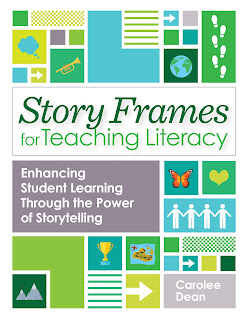
It's the start of a new school year and teachers are looking for ways to provide authentic and engaging writing experiences for students. With that in mind, I'm circling back to the topic of memoir with an interview and Q&A with Leslie Roessing, M. Ed. Lesley is a featured author in my book, Story Frames for Teaching Literacy: Enhancing Student Learning Through the Power of Storytelling (Brookes Publishing, 2021), and wrote the chapter entitled, “Memoir: Writing Our Lives.” 

She also has a book on the subject called Bridging the Gap: Reading Critically and Writing Meaningfully to Get to the Core. In this exciting resource, she uses memoir and creative nonfiction with reluctant readers and writers to form bridges between reading and writing, fiction and nonfiction, and narrative and informative writing. Lesley has vast experience on the subject. She taught middle school for more than 20 years, served as Founding Director of the Coastal Savannah Writing Project, and was a Senior Lecturer at Georgia Southern University.
 
Carolee: In your chapter in Story Frames as well as in your book, Bridging the Gap, you talk about using memoir as a bridge between narrative and informative writing and even argument writing. What connections do you see between these very different genres, and how do you bridge that gap with students?
See Roessing's chapter entitled
"Memoir: Writing Our Lives."

 Lesley: When I teach or work with teachers, I advocate moving readers and writers from the familiar to the less familiar, moving from narrative to informative to argument in reading and writing. When we think of narrative writing, we think of fiction. Humans have always been storytellers (“Once upon a time…”). Young readers usually begin with reading stories and writing stories. And, therefore, that was how I began my teaching year—with reading and writing stories.
 
I found the jump to informational reading and writing presented too wide a gap. Students see that mode as completely different from the narrative mode that is more familiar, and many teachers teach fiction and nonfiction reading and narrative and informative writing in completely different ways.
 
I realized that memoir, as narrative nonfiction, contained elements of, and used strategies for, both narrative and informational and could be employed to bridge that gap. Memoir, as creative or narrative nonfiction, is that perfect bridge between the two modes. Students read information and facts about others through narrative structure as they write information and facts about themselves through narrative structure, meeting both State Standards in Literature and in Informational Texts and in Narrative Writing and in Informative/Explanatory Writing.
 
Memoir writing can also lead to more effective opinion and argument writing. Through writing memoir, writers discover and uncover their own passions and convictions, leading them to choose more effective argument topics; readers are introduced to the roots of the passions and convictions of others as they read memoirs.
 
Carolee:  You have observed that writing memoir helps students close the achievement gap because they are able to activate prior knowledge which improves success. You say that memoir essentially “levels the playing field.” How have you seen students transfer success with memoir writing to writing where they may not have as much background knowledge?
 
Lesley: Because memoir writing is personal and writers are sharing their stories, in all my classes and in classes where I facilitated a memoir writing unit, I have found that students want to do their best writing when writing memoirs. This was one unit where all these students participated and wrote (which is why I decided to write Bridging the Gap). Therefore, writing focus lessons have more meaning and students are more willing to employ lessons in their writing. Also, this is a unit where I encouraged students to take risks in their writing (with no chance of penalty for a “failure”), so they were more willing to try new strategies. This transferred to their writings in all modes for the remainder of the year and led to better writing.
 
It is true that writers have all the background knowledge needed to write memoir, but to make their memoirs better or to expand their memoir writing, they were taught to employ “research” strategies, such as experiential research (researching their memories and learning how to include what they experienced effectively in their writing). Even though memoir is writing about experiences as the memoirist remembers, there can be some interviewing people from the past for some details and writers learned research techniques. And last, memoirists were encouraged to utilize Google Earth and Maps to aid memory of places as well as artifacts and texts, such as pictures and news articles. In these ways, they are amassing research strategies they can employ in informative and argument writing and which can provide background knowledge.
 
Carolee: You use mentor texts as exemplars for good memoir writing. What are some of your favorite mentor texts to use with students?

 Lesley: My favorite mentor texts vary with the writing format I am teaching—poetry, prose, graphics, and audio memoirs, but, for memoir in general, I love Patricia Polacco’s memoir picture books and Cynthia Rylant’s picture books and her poetry book. In my book on memoir reading and writing, Bridging the Gap: Reading Critically and Writing Meaningfully to Get to the Core, I include mentor texts in each chapter. I have updated some of the oral or audio memoirs that I included. I love Jerry Seinfield’s Halloween which is available on YouTube and also was published as a picture book. Another favorite for older students is Carmen Agra Deedy's TED Talk "Spinning a Story of Mama" which I had the opportunity to see her present in person.
 
In April 2020 I wrote a guest blog for YA Wednesday, “Memoirs for Reading and Writing,” that reviewed full-length Upper Elementary, Middle Grades, and Young Adult memoirs but also included collections of short memoirs appropriate for different ages: http://www.drbickmoresyawednesday.com/weekly-posts/memoirs-for-reading-and-writing-by-lesley-roessing
 
Carolee: Do you have any final tips for teachers who want to use memoir writing with struggling students?
 
Lesley: My best tip for teachers working with struggling or reluctant writers is to spend more time on brainstorming and prewriting. In Bridging the Gap I provide brainstorming forms for all the writings because the more brainstorming ideas and prewriting strategies (such as organizing ideas, adding details, using the senses, etc) writers employ, and the more time spent on prewriting, the easier, and better, the writing. Donald M. Murray wrote that “few teachers have ever allowed adequate time for prewriting, that essential stage in the writing process which precedes a completed first draft.” (“Write Before Writing” College Composition and Communication, Vol. 29, No. 4 (Dec., 1978), pp. 375-381, National Council of Teachers of English.
 
Carolee: Thank you so much for being with us today and for your invaluable insights.
 
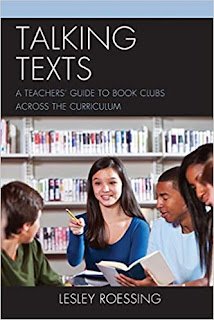
Be sure to check out Lesley’s chapter in Story Frames for Teaching Literacy as well as her most recent book, Talking Texts: A Teacher’s Guide to Book Clubs Across the Curriculum.
To explore the contrast between memoir and autobiography, see my blog post from earlier in April about Memoir Vs. Autobiography: All Our Stories Matter. For a list of books written by children’s authors about their personal life experiences, go to the end of my teacher’s guide on
Activities for Using Watercress with Older Students. The guide includes several writing activities linked to the Common Core for grades 3-8 based on autobiographical stories.

To revisit posts from other Story Frames authors, go to:

Amy Miller and Superhero Stories

The Family Story: Interview with Parent Advocate Mary Jo O'Neill.


Thanks for stopping by my blog. Sign up for my newsletter HERE to keep up with news and free offers and you will receive the free writing template for Travel Trouble sent directly to your email address.

Friday, February 19, 2021

STORY FRAMES COMING SOON

I am excited and delighted to share the cover for my new book, STORY FRAMES FOR TEACHING LITERACY coming out with Brookes Publishing in early April 2021. Many of you have participated in my workshops for Story Frames (formerly The Secret Language of Stories). I have presented these strategies at ASHA, ILA/IRA, and the Annual Reading, Literacy and Learning Conference put on each year by the International Dyslexia Association (IDA), as well as many smaller conferences and workshops. 

If you have used these resources with your students and would like to share your experiences, please contact me at carolee@wordtravelliteracy.com.

Story Frames combines the strategies that teachers and SLPs implement to teach story grammar with the techniques that professional authors use to plot their books. This unique combination helps students appreciate stories at a deeper level and gives them tools for creating their own narratives. 

Here are a few of the features of the book described by the publisher:

"This guidebook reveals how to unlock literacy and learning skills by captivating K–12 students with the power of stories: how they’re structured, how they reflect and change lives, and how students can create their own original narratives. Using dozens of diverse fiction and nonfiction books as vivid examples, you’ll discover how to teach 12 key story elements (Story Frames) in dynamic, fun, and highly visual ways, including Quick Draws, storyboards, and icons that make narrative structure easy to grasp. Then you’ll get in-depth guidance on how to use knowledge of story structure to build core literacy skills—from oral language to reading comprehension—and empower students to write their own personal stories in a variety of genres. The book includes more than 35 adaptable lesson plans and a complete package of online support materials including PowerPoints and other tools for online learning." 

ONLINE MATERIALS: Implement Story Frames effectively with a full package of downloadable materials, including sample storyboards and templates, 40+ handouts and worksheets, game cards, slide decks to use in instruction, 30+ sample story analyses of books for children and young adults, and brief literature guides for applying Story Frames to picture books and to chapter books and novels.

Several noteworthy authors have contributed chapters to Story Frames including:

Amy Miller, Director of the May Center for Learning in Santa Fe, NM shares how students transform personal experiences into superhero stories. She runs a project called the Dyslexia Justice League where she uses superheroes and the Hero's Journey to help students explore personal struggles and develop a growth mindset.

Paula Moraine, educator, consultant, and author of Helping Students Take Control of Everyday Executive Functions provides practical strategies for using narratives as a medium for improving executive function skills.

Mary Jo O'Neill, parent advocate, discusses how getting parents to write down their family stories provides a powerful tool for advocacy. Her chapter highlights a type of persuasive writing that has real-world implications for students receiving special education services. 

Lesley Roessing, university lecturer and author of Bridging the Gap: Reading Critically and Writing Meaningfully to Get to the Core shares insights for teaching memoir writing and explains how memoir can be a bridge to expository writing.

William Van Cleave, educational consultant and author of Writing Matters: Designing Sentence Skills in Students of All Ages, helps educators make sense out of grammar instruction by focusing on function rather than form.

Carol Westby, university lecturer, researcher, author, and leading authority on narrative development, discusses the importance of considering multicultural perspectives in the writing of personal stories and the ways storytelling varies across countries and cultures. Her chapter also discusses strategies for empowering English as a Second Language (ESL) students. She offers several online courses through PESI including Developing Social-Emotional Skills and Self Regulation in Students: Narrative Intervention for Long-Term Academic, Personal & Social Success. 

For a full list of the downloadable resources that accompany my book, find out more at Brookes Publishing.

Sign up for my monthly NEWSLETTER for articles, book news, and FREE offers. Receive a FREE Story Template PDF called Travel Trouble when you sign up.